How professional teams configure the M.1 TCU for wet conditions. Slip targets, throttle maps, and real race data.
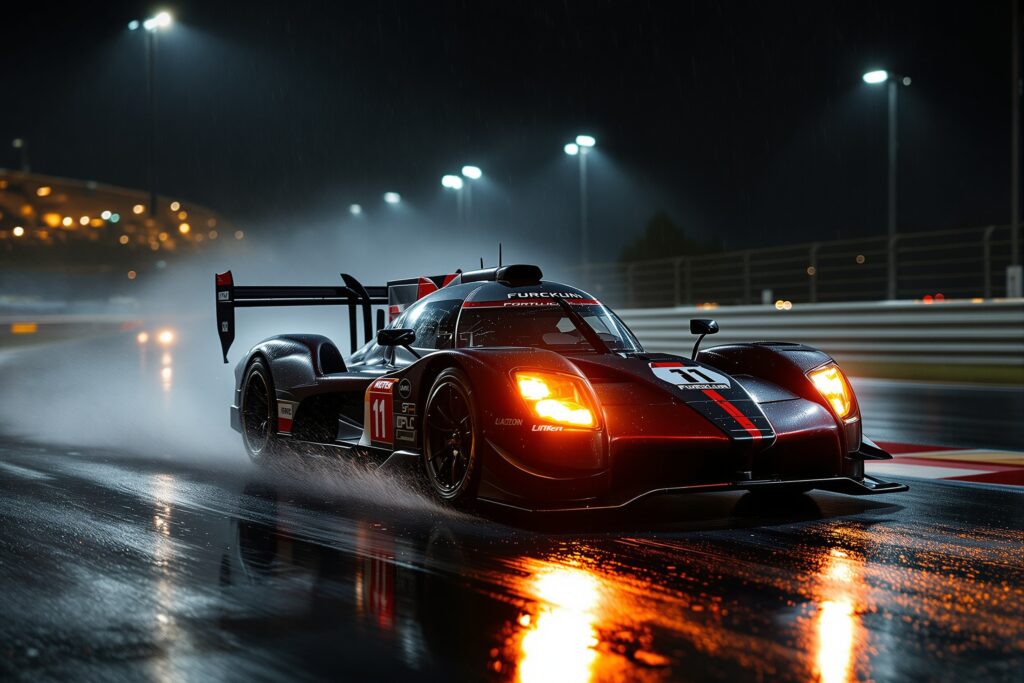
Racing in the rain demands absolute precision from both the driver and the vehicle. A soaked track drastically reduces available tire grip, changing the fundamental physics of how a car accelerates out of a corner. To manage this loss of traction, professional racing teams rely heavily on advanced electronic systems. The M.1 Traction Control Unit (TCU) serves as the brain of this operation, regulating power delivery to keep the car facing the right direction.
Understanding how to program the M.1 TCU separates front-runners from the rest of the pack during a rainstorm. This guide explores the specific calibration techniques engineers use when the skies open up. You will learn the mechanics behind adjusting slip targets, the importance of progressive throttle mapping, and how to read telemetry data to optimize your wet weather setup.
Understanding Slip Targets in Wet Weather
A slip target defines the acceptable difference in speed between the driven wheels and the non-driven wheels. A small amount of tire slip actually generates the maximum forward acceleration. In dry conditions, engineers configure the M.1 TCU to allow a relatively high slip percentage, letting the slick tires bite into the porous asphalt.
Wet conditions shrink this optimal slip window entirely. Rainwater sits on top of the track surface, creating a physical barrier between the rubber and the road. If the rear tires spin too fast, they will fail to disperse the water through their tread blocks. The tire then rides on top of the moisture, resulting in a sudden and total loss of grip known as aquaplaning.
To combat this, race engineers significantly lower the base slip targets in the M.1 TCU. They program the system to intervene much earlier. Modern systems also utilize dynamic slip targets that adjust based on the steering angle. When the steering wheel is turned heavily mid-corner, the slip target is reduced to near zero to prioritize lateral stability. As the driver unwinds the steering wheel upon corner exit, the TCU gradually increases the allowable slip, permitting maximum forward acceleration only when the car is straight.
Adjusting Throttle Maps for Low-Grip Scenarios
Traction control acts as a safety net, but the primary method for managing power delivery starts with the throttle pedal. Throttle mapping controls the direct relationship between the driver’s physical pedal position and the engine’s actual torque request.
During a dry session, teams often use a linear or aggressive throttle map. Pressing the pedal 25 percent might deliver 40 percent of the engine’s available torque, providing a highly responsive feel. Applying this same map in a rain race almost guarantees wheelspin. Wet tires simply cannot handle sudden spikes in rotational force.
Engineers solve this by uploading a progressive throttle map to the engine control unit. A progressive map softens the initial phase of pedal travel. A driver might press the accelerator 50 percent of the way down, but the engine only delivers 25 percent of its torque. This flattened response curve gives the driver a much wider physical range of motion to modulate power precisely.
By the time the pedal reaches the floor, the map ramps up to deliver full power, ensuring the car still achieves maximum top speed on the straights. Combining a progressive throttle map with the M.1 TCU’s early intervention strategies creates a smooth, predictable power delivery system that protects the rear tires from breaking traction.
Analyzing Real Race Data for Traction Calibration
Setting up the car in the garage is only the first step. Track conditions evolve constantly during a wet race. The rain might intensify, or a dry line might form as the field laps the circuit. Teams must continuously refine their traction control strategies by analyzing real race telemetry.
Data engineers look for specific anomalies in the data logs to evaluate the M.1 TCU’s performance. They overlay the rear wheel speed sensor data with the vehicle’s longitudinal G-force traces. A sharp spike in rear wheel speed that does not result in a corresponding increase in forward G-force indicates wasted energy. The tire is spinning, but the car is not accelerating.
If the data shows frequent, heavy interventions from the traction control system, the base setup is likely too aggressive. The engine is constantly cutting spark or retarding timing, which disrupts the balance of the chassis. In this scenario, the engineer will radio the driver to switch to a more restrictive M.1 TCU map, or they will soften the mechanical suspension setup to generate more natural mechanical grip. Conversely, if the track begins to dry and the telemetry shows zero wheelspin out of tight hairpins, the traction control is overly conservative and restricting lap times.
Key Takeaways for Wet Weather Strategies
Mastering the wet weather configuration of the M.1 TCU requires a blend of electronic tuning and data analysis. By lowering slip targets to prevent aquaplaning, engineers keep the car stable through standing water. Softening the throttle maps provides the driver with the physical precision needed to manage torque application out of slippery corners. Finally, continuous monitoring of wheel speed and G-force telemetry ensures the system adapts to an ever-changing track surface.
Applying these strategies will help you find the limit of adhesion safely, maximizing your pace even in the worst weather conditions. Test these adjustments during your next wet track session, and use your data logs to find the perfect balance between electronic intervention and raw driver control.